


The Warsaw Voice | 24 wrzesień 2008
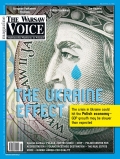
* Pokazana okładka tytułu jest aktualną okładką tytułu The Warsaw Voice. Kiosk24.pl nie gwarantuje, że czytany artykuł pochodzi z numeru, którego okładka jest prezentowana.
Economists, business leaders and investors have welcomed Polish Prime Minister Donald Tusk’s announcement that Poland will be aiming to adopt the single European currency as early as 2011. But experts say the goal will be difficult to achieve.
“I wish to define precisely one of our main targets—Poland’s entry to the euro zone,” Tusk said at an economic
conference in Krynica, a mountain spa town in southern Poland, in September. “Today, we can responsibly say that our target is the year 2011. This task is difficult, but we think it is feasible.” Tusk’s announcement came as a surprise to many financiers. Sławomir Skrzypek, head of Poland’s central bank, said “2011 is a very ambitious target, to put it mildly.” Tusk, other government officials and members of the Monetary Policy Council headed by Skrzypek then held a meeting Sept. 16 at which they agreed that 2011 should be the target year for Poland’s meeting the euro adoption criteria. Most analysts were surprised with Tusk’s statement because until recently the government had refrained from giving any specific dates for euro adoption and insisted it would not do that anytime soon. Analysts expected Poland to embrace the euro sometime between 2012 and 2015. Under the European Union’s Maastricht Treaty, a country applying to enter the euro zone should have joined the exchange rate mechanism (ERM II) under the European Monetary System and its national currency should have remained
in the system for at least two consecutive years. Later, the European Commission assesses the state of the country’s economy and refers the issue to the European Parliament. The European Council makes the final decision. Poland has no problem meeting the socalled fiscal criterion, experts say, because its general government deficit has fallen below 3 percent of GDP. But it still has problems with exchange rate stability, and its inflation rate has been close to the highest permissible level for several months now. Katarzyna Zajdel-Kurowska, Poland’s deputy finance minister, says Poland’s entry to the ERM II system next year and adoption of the euro in 2011 are realistic targets, especially as international financial markets are likely to stabilize soon.
Target date questioned
Polish MEP Dariusz Rosati, a former finance minister and former member of the Monetary Council, is less optimistic. “I am happy that the government has the will to adopt the euro soon, but the earliest realistic date is the beginning of 2012—on condition that the government gets down to work right away,” Rosati said. There should not be any problems with fulfilling the Maastricht criteria, Rosati says, because Poland already meets most of the criteria and no major threats in this respect can be expected. “However, there are two political decisions that need to be made. The constitution has to be amended, which requires a vast parliamentary majority, and approval is needed from the European Commission,” he said. “I do not expect any major problems if the economy is in good shape and if there are no doubts that we have met the requirements permanently. But if it turns out that we have problems with inflation or the exchange rate the Commission may assess us very harshly and the moment of entry could be considerably delayed.” Some experts say adopting the euro in 2011 is unlikely because of the political calendar in Poland, with a presidential election scheduled for 2010 and a parliamentary election in 2011.
Business leaders have welcomed the government’s commitment to bring Poland into the euro zone in 2011. “The adoption of the euro will make life much easier for entrepreneurs, especially those who do business with the euro zone,” said Andrzej Arendarski, head of the Polish Chamber of Commerce (KIG). “They will no longer need to constantly monitor exchange rates and incur costs associated with currency exchange. The risk of losses caused by exchange rate changes will also disappear once the single currency is adopted.” The Association of Polish Exporters says an early entry to the euro zone would make Polish exports more profitable and competitive. Business Centre Club experts say the benefits of adopting the euro for Poland would include faster economic
growth, easier handling of increased tourist traffic and more efficient preparations for the Euro 2012 soccer championships. According to a survey by the PBS polling company for the Gazeta Wyborcza daily, around 35 percent of respondents support the government’s plan to replace the zloty with the euro in 2011; one in four would prefer Poland to adopt the euro later than 2011; and 31 percent do not want Poland to adopt the single European currency at all. Meanwhile, in a survey by TNS OBOP for the Dziennik daily, 50 percent of people questioned said they would like their country to switch to the euro.
Andrzej Ratajczyk
 Wróć do czytelni